The lantern festival is one of the most important festivals in Chinese culture.
Also known as 元宵節; Yuánxiāo jié (translated into the Yuan Xiao Festival), this festival is celebrated on the 15th day on the first month of the Chinese Lunar Calendar, or in short, 15 days after the Chinese New year.
As we know, Chinese traditional festivals are based on the Lunar Calendar instead of our day-to-day Gregorian Calendar. Since the Lunar Calendar has only 354 days instead of 365 days in the Gregorian calendar, the Lantern Festival is celebrated on different Gregorian dates every year, but always between February and March.
The main function of the Lantern Festival is to mark the end of the Spring Festival (Chinese New Year celebration), but the Lantern Festival has its own traditions and excitements, with the lanterns being the festival’s main signature.
The Lantern Festival symbolizes reconciliation, peacefulness, and forgiveness, so it also has a deep meaning in the Chinese tradition.
Before we learn further about the traditions and activities of the Lantern Festival, let us begin by discussing the history and the legend behind it.
History Behind The Lantern Festival
If we compare the histories behind the different Chinese festivals, then the Lantern Festival can be considered relatively “young”.
The oldest recorded history for the Lantern Festival can be traced back to the Han Dynasty period (206 BC – 220 AD). The lanterns weren’t yet part of the tradition back then, but the Yuan Xiao festival had been established as a national observance by Emperor Wen. Emperor Wen mandated the celebration of the Yuan Xiao festival every 15th day of the 1st month, and the festival was originally intended as a worship ritual for the supreme god Taiyi.
Beyond imperial ritual, historians also believe the festival absorbed older seasonal customs. The first full moon of the lunar year marked the symbolic return of light after winter, and early agrarian communities celebrated this moment as a sign of renewal and fertility. This association with light and the turning of the seasons later aligned naturally with the lantern imagery that became central to the festival.
Entering the Eastern Han Dynasty period, there was a major shift in how the Yuan Xiao festival was celebrated, especially due to the spread of Buddhism across China. The reigning Emperor Ming learned of how Buddhist monks prayed to the Buddha on the 15th day of the first month and lit lanterns as part of their devotional rituals.
Attracted to this practice, Emperor Ming ordered eunuchs to place lanterns in the palace and royal temples during the Yuan Xiao festival. Common people soon imitated the custom, and lantern-lighting gradually became a defining feature of the celebration.
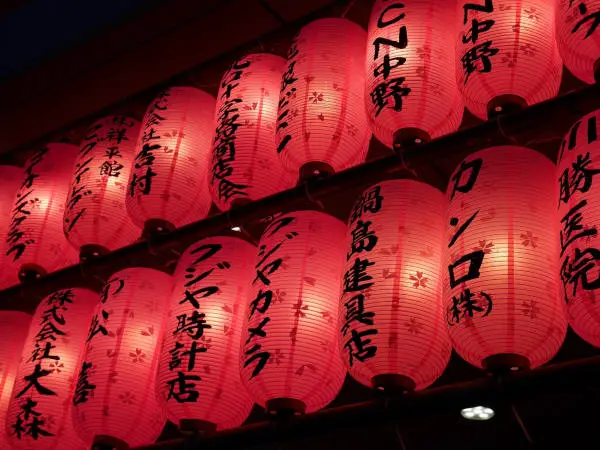
During the Tang Dynasty period (618–907 AD), the festival grew into a grand public spectacle. Cities such as Chang’an hosted large government-sponsored lantern markets and night fairs, turning the celebration into one of the earliest large-scale urban festivals in Chinese history.
People began crafting their own lanterns with elaborate designs, and they believed the lights symbolized the prosperity and harmony of the empire. The Tang court also extended the festivities to three days and temporarily lifted the city curfew so citizens could celebrate day and night. Contemporary poems describe avenues glowing “bright as daylight” with multi-story lantern towers.
Not too many changes happened during the Song Dynasty period (960–1279 AD), but the celebration period was lengthened once again to five days. Advances in papermaking and craftsmanship led to specialized lantern artisans and even mechanical lanterns with moving scenes powered by candle heat, especially in cities like Kaifeng. Another additional tradition was writing riddles on lanterns, a practice that is still upheld today and reflects the scholarly culture of the Song era.
During the Ming Dynasty period (1368–1644 AD), the Lantern Festival celebration was extended to as long as ten days, becoming a major seasonal fair combining commerce, performance, and religious devotion. Lantern viewing also evolved into a popular social outing, one of the few occasions when people of different classes and even unmarried young men and women could mingle freely in public spaces.
Finally, the Qing Dynasty period (1644–1912 AD) firmly established the Lantern Festival as one of the major annual festivals in China. This period introduced firecrackers and fireworks as prominent elements of the celebration, along with acrobatic shows, Dragon Dance, and Lion Dance performances, and the widespread display and release of red lanterns into the night sky—traditions that remain closely associated with the Lantern Festival today.
Take a look at these awesome Chinese Lanterns.- Aff.link
Legends and Folklore Behind The Lantern Festival
As with other festivals in China, there are numerous different variations of folklore and myths behind the Lantern Festival. However, the most popular and well-known legend is one about Dongfang Shuo and the palace maid named Yuan Xiao.
This story is about a wise man named Dongfang Shuo who turned a tragedy into a celebration in Chang’an (the capital city of the Han Dynasty).
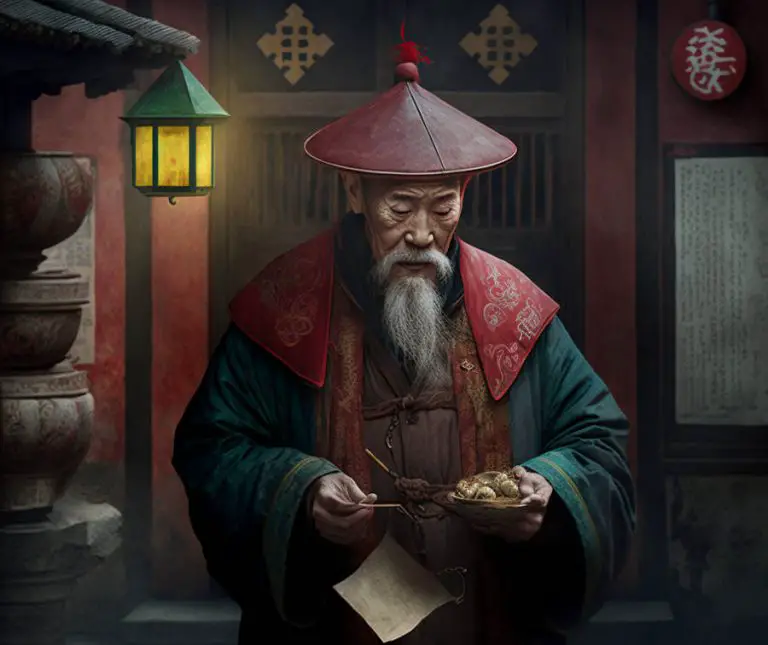
Dongfang Shuo was an advisor of the emperor, and during one winter, he visited the Imperial Garden to pluck a plum blossom for the Emperor. Not far from the garden, he saw a crying lady who was about to jump to a deep well.
Dongfang Shuo hurried to stop her and asked why she attempted suicide. The lady, named Yuan Xiao, then told him the story of how after she entered the Royal Palace, she no longer can visit her parents. Feeling that she was an ungrateful child, she chose suicide. Pitying her, Dongfang Zhuo then promised Yuan Xiao to let her meet her parents.
Dongfang Shuo was also a famous fortune teller, and one day he left the palace to open a fortune teller stall in the city. With his reputation, many people visited the stall to get their fortune told by the Imperial advisor. However, Dongfang Shuo gave the same fortune to all of them: fire will come to bring tragedy on the 15th day of the 1st month.
Scared of the prophecy, people asked Dongfang Shuo for a solution, and Dongfang Shuo told them that on the 13th day of the 1st month, the Fire God will send a fairy with red clothing, and all of them should ask for forgiveness from this fairy.
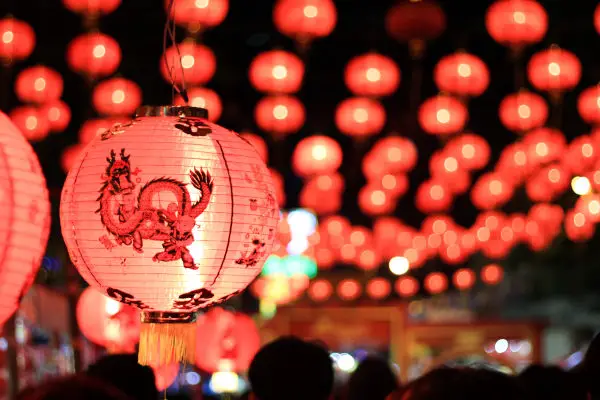
Thus, the 13th day comes, and Dongfang told Yuan Xiao to play the part of the fairy. Wearing red clothing, Yuan Xiao walked into the middle of the crowd. Following Dongfang’s advice, people came to Yuan Xiao (acting as the fairy) and asked for forgiveness from the Fire God.
Yuan Xiao then tells the people that she had a copy of a decree from the Fire God, and she ordered the people to bring the decree to the Emperor.
The Emperor received the decree, then asked for Dongfang’s advice regarding the situation. Dongfang told the Emperor that the Fire God really loved Tangyuan (Chinese sweet dumpling), and Dongfang told the Emperor that there is a palace maid that can make really good Tangyuan. Dongfang told the emperor that every family in the city must also make their own Tangyuan, hang a red lantern on the house, and light up firecrackers as a worship ritual for the Fire God.
Long story short, the Emperor ordered the people to do as Dongfang has advised, and during the 15th day of the 1st month, the city was full of lit lanterns, firecrackers, and fireworks. On the night of the festival, Yuan Xiao’s parents finally come to the palace to celebrate the festival, and finally, Yuan Xiao can meet her parents.
The Emperor, in awe of the festival’s celebration, ordered the people to celebrate this festival every year, and this is also why the festival is also called the Yuan Xiao Festival.
Besides the Dongfang Shuo tale, another widely told origin myth links the festival to the Jade Emperor (玉皇大帝) and his celestial crane. In this story, villagers accidentally killed the emperor’s sacred bird. Enraged, he planned to burn their town on the 15th day. A compassionate fairy warned the people to hang red lanterns and set off firecrackers so the heavenly army would think the town was already ablaze. The deception saved the town—explaining the festival’s fire symbolism and lantern displays.
Some regions also associate the Lantern Festival with the Taoist deity Tianguan (天官), the Heavenly Official who bestows blessings. The 15th day of the first lunar month is his birthday in Taoist cosmology, which is why the night is also called Shangyuan Festival (上元节)—the “Upper Prime” of the Three Yuan festivals (Heaven, Earth, Water).
Activities and Traditions on Lantern Festival Celebration
As the name Lantern Festival suggests, lanterns are the main tradition of this festival, but there are also many other customs and activities that are inseparable from the celebration. Over time, these practices have gained layered cultural meanings connected to wishes for reunion, prosperity, wisdom, and protection in the coming year.
Here are some of the key activities:
Red lanterns with various designs
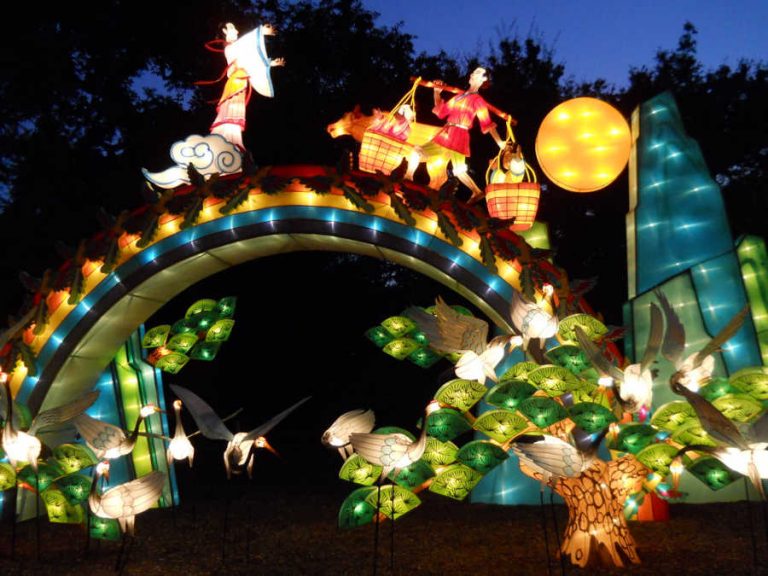
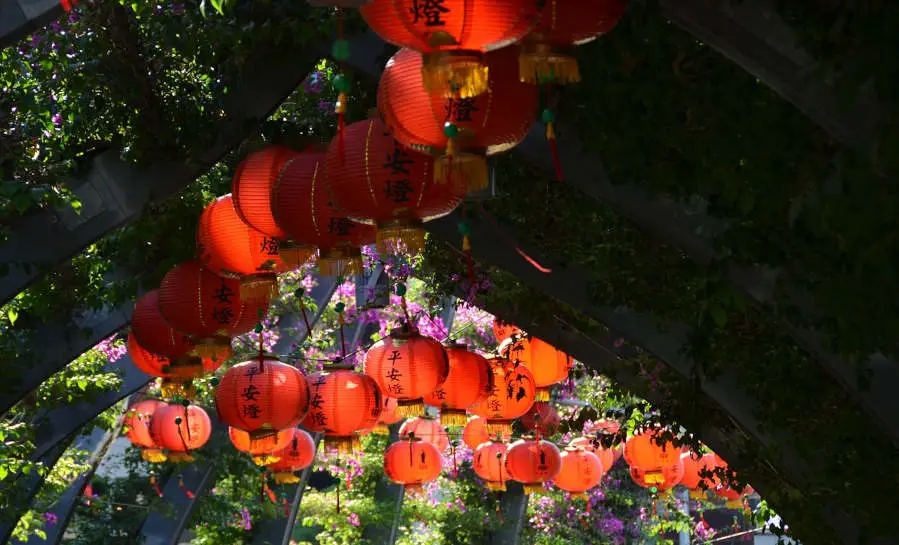
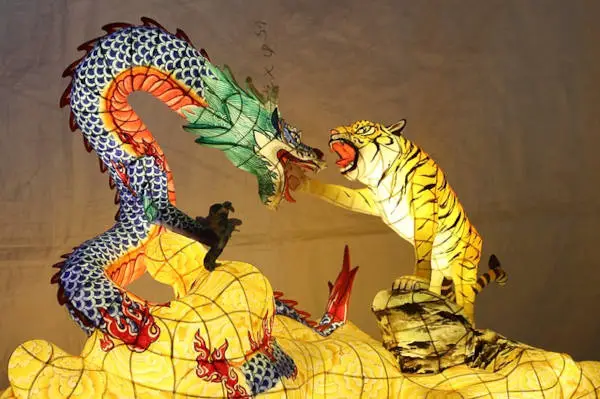
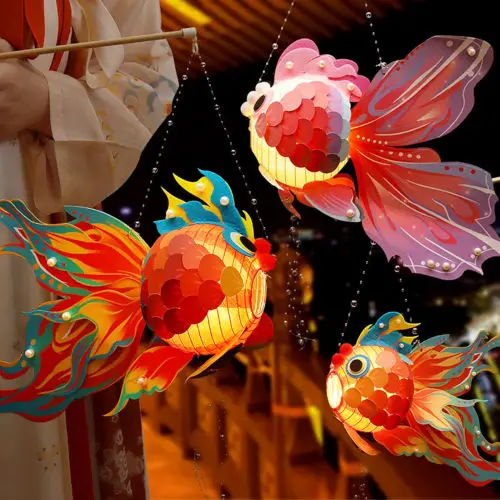
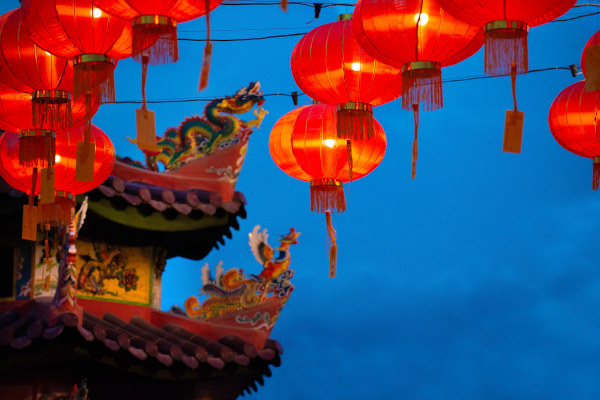
Traditionally, lanterns were made of paper in bright red—the color symbolizing happiness and good fortune. In traditional belief, different lantern shapes also carried specific meanings: round lanterns represented family unity, lotus lanterns reflected purity and enlightenment, dragon lanterns symbolized power and vitality, and rabbit lanterns evoked the Moon and longevity. In imperial times, some communities even built large lantern towers or “lantern mountains” representing mythical realms of immortals.
In the modern era, lanterns appear in countless forms and materials, from intricate dragon-shaped lanterns to large illuminated installations using LEDs. These innovations have made Lantern Festival displays even more visually spectacular while preserving the core symbolism of light overcoming darkness and welcoming a bright new year.
Related reading: Why Is Red Important in China: From Emperors to Emojis – Opens in new tab
Eating tangyuan
Tangyuan, the traditional sweet dumpling, remains one of the core culinary traditions of the Lantern Festival. Made from glutinous rice flour and shaped into smooth white balls, tangyuan symbolize reunion and completeness because of their round shape. They are commonly filled with sweet pastes such as sesame, red bean, peanut, date, or rose, each historically associated with auspicious meanings like wealth, longevity, or love. Savory versions with pork, vegetables, or shrimp are also enjoyed in some regions.
In northern China, a related dumpling called yuanxiao is prepared differently—the filling is rolled in dry flour rather than wrapped in dough—creating a rougher texture. Tangyuan are traditionally served in lightly sweet fermented rice soup (tian jiu), reinforcing the festival’s themes of warmth and togetherness.

Lantern riddles
One of the most beloved festival pastimes is solving riddles written on lanterns. Anyone who guesses correctly can approach the lantern’s owner and receive a small prize. This tradition, known as lantern riddles (灯谜), flourished during the Song dynasty, when scholars delighted in creating wordplay based on Chinese characters, classical poetry, and puns. Beyond entertainment, the activity symbolized the illumination of wisdom—just as lantern light dispels darkness.
Dragon Dance and Lion Dance
Although the Dragon Dance and Lion Dance are more commonly associated with the Spring Festival (Chinese New Year), they are also frequently performed during Lantern Festival celebrations. In a Lion Dance, two performers share a lion costume: the front dancer controls the head while the rear dancer moves the body and tail, both synchronized to the rhythm of drums, gongs, and cymbals. The Dragon Dance involves a larger team carrying poles attached to a long dragon figure, creating flowing, wave-like movements.
Traditionally, both dances were believed to drive away evil spirits and invite blessings. The lion served as a protective guardian, while the dragon—controller of rain in Chinese cosmology—symbolically ensured agricultural prosperity as spring approached.
Together, these activities transform the Lantern Festival into a vibrant communal celebration blending visual spectacle, food symbolism, intellectual play, and ritual performance—marking not only the close of the New Year season but also the hopeful beginning of the year’s first full moon.
Check out our “Free Culture Library“. We have compiled some great free resources, about Chinese culture, for your research.
Regional Lantern Festival Customs Across China
Although the Lantern Festival is celebrated nationwide, regional customs across China give the festival distinct local colors, craftsmanship styles, and ritual meanings.
Zigong, Sichuan — Giant Lantern Spectacles
Zigong is often called China’s “Lantern Capital.” Its lantern tradition dates back to the Tang and Song dynasties but rose to national prominence in the 20th century. Zigong’s lantern fairs are famous for massive, engineering-scale installations—some exceeding 20 meters in height—depicting dragons, mythological scenes, historical epics, and modern themes. Unlike simple paper lanterns, many Zigong displays use silk, steel frameworks, porcelain, and intricate internal lighting systems. Today, Zigong lantern artisans export their creations worldwide, turning a traditional festival craft into a global cultural industry.
Nanjing — Qinhuai Lantern Fair
In Nanjing, the Lantern Festival is closely tied to the historic Qinhuai River area. The Qinhuai Lantern Fair traces its roots back over 1,700 years and flourished during the Ming dynasty when Nanjing served as the imperial capital. The festival combines river lantern reflections, temple fairs, folk performances, and traditional snacks. The glowing lanterns along the waterways create a poetic scene often described in classical literature as a “river of stars.”
Beijing — Imperial-Style Lantern Displays
In Beijing, Lantern Festival celebrations historically reflected imperial grandeur. During the Ming and Qing dynasties, palace lanterns were elaborately crafted with painted silk, carved frames, and auspicious motifs such as phoenixes and peonies. Modern celebrations often recreate these court-style lanterns in public parks and cultural heritage sites, preserving the aesthetic of imperial craftsmanship.
Fujian and Guangdong — Ancestral and Temple Traditions
In southern provinces such as Fujian and Guangdong, the Lantern Festival strongly emphasizes ancestral worship and temple gatherings. Families carry lanterns to ancestral halls, offer incense, and pray for prosperity in the coming year. In some Hokkien communities, lantern processions include clan banners and traditional music, reinforcing family lineage and community identity.
Shanxi — Flour Figurines and Decorative Crafts
In parts of Shanxi, families craft decorative flour sculptures shaped like animals, flowers, or zodiac signs during the Lantern Festival. These colorful creations are both offerings and edible art, symbolizing wishes for abundance and protection.
Taiwan — Sky Lantern Blessings
In Pingxi, releasing sky lanterns has become one of the most internationally recognized Lantern Festival traditions. Participants write wishes on paper lanterns and release them into the night sky, symbolizing hopes rising toward heaven. While sky lantern customs exist in parts of mainland China, Pingxi’s mass release events have turned the practice into a major cultural and tourism highlight.
These regional variations demonstrate that while the Lantern Festival shares core symbols—light, reunion, and renewal—each community expresses those themes through its own history, craftsmanship, geography, and local beliefs.

The Lantern Festival in Chinese Diaspora Communities
As Chinese migrants settled across Asia and later around the world, the Lantern Festival traveled with them, adapting to new cultural environments while preserving its core themes of reunion, light, and renewal. In diaspora communities, the festival often serves as the final major gathering of the Lunar New Year season, reinforcing shared heritage and community bonds.
Southeast Asia — Community Parades and Temple Celebrations
In countries with long-established Chinese populations such as Malaysia and Singapore, the Lantern Festival is celebrated with large public lantern displays, lion and dragon dances, and night parades in historic Chinatown districts. Temples host prayer ceremonies and lantern-lighting rituals for blessings in the new year. In some areas, rivers or lakes are decorated with floating lanterns, blending Chinese symbolism with local water-festival traditions.
In Vietnam, the festival is known as Tết Nguyên Tiêu and carries strong literary and spiritual associations. Families visit temples to pray for peace and prosperity, and poetry gatherings are sometimes held to honor classical learning—echoing the historical Chinese custom of scholarly lantern riddles.

Indonesia — Blended Cultural Expressions
In Indonesia, particularly in cities such as Singkawang, Lantern Festival celebrations merge Chinese lantern and lion dance traditions with local music, costumes, and street processions. These events reflect centuries of cultural exchange between Chinese settlers and indigenous communities, creating a uniquely hybrid festival atmosphere.
Overseas Chinatowns — Cultural Identity and Public Festivals
In North America, Europe, and Australia, Lantern Festival events are commonly organized by cultural associations and city governments. Public parks and Chinatowns host lantern exhibitions, stage performances, and food fairs featuring tangyuan and festive snacks. For diaspora families, attending lantern displays and sharing dumplings provides continuity with ancestral customs, especially for younger generations born abroad.
Symbol of Heritage and Continuity
In diaspora contexts, the Lantern Festival often carries meanings beyond seasonal celebration. It functions as:
- A marker of ethnic identity
- A teaching moment for traditional stories and symbols
- A public expression of multicultural heritage
- A bridge between generations
Even when adapted to new settings—electric lanterns instead of candles, staged performances instead of village rituals—the festival’s essential symbolism remains intact: light illuminating darkness, families reunited after the New Year, and hopes carried forward into the year’s first full moon.
Modern Transformations and Cultural Heritage
In contemporary China and across the world, the Lantern Festival has undergone significant transformation while remaining rooted in ancient symbolism. Advances in technology, urbanization, tourism, and cultural preservation efforts have reshaped how the festival is experienced, turning it into both a living tradition and a showcase of heritage.
Technological Innovation in Lantern Art
Traditional paper-and-bamboo lanterns now coexist with large-scale illuminated installations using steel frameworks, programmable LEDs, projection mapping, and animated lighting sequences. Modern lantern fairs often feature moving figures, changing colors, and interactive elements, transforming historical motifs into immersive visual environments. Cities such as Shanghai and Xi’an host expansive lantern exhibitions that blend folklore scenes with contemporary design, attracting millions of visitors each year.
Tourism and Urban Night Festivals
Many municipalities have developed Lantern Festival events into major winter tourism attractions. Historic districts, parks, and waterfronts are decorated with themed lantern routes, night markets, and cultural performances. These festivals extend the economic life of the Lunar New Year season and encourage nighttime cultural tourism, especially in heritage cities. The revival of ancient lantern fairs in locations such as Nanjing demonstrates how historical traditions are repurposed for modern urban culture.
Intangible Cultural Heritage Preservation
Lantern craftsmanship has increasingly been recognized as intangible cultural heritage. Regional techniques—such as silk lantern making, carved wooden frames, and painted gauze lanterns—are preserved through workshops, apprenticeships, and museum programs. Artisans from places like Zigong have gained national recognition for maintaining complex construction methods that date back centuries. This heritage framing emphasizes lantern making not only as decoration but as a traditional art form embodying symbolism, engineering, and community memory.
Digital and Global Celebrations
The Lantern Festival has also entered the digital age. Virtual lantern exhibitions, livestreamed dragon dances, and online riddle games allow participation beyond physical locations. International lantern festivals—often organized in botanical gardens or cultural parks—introduce Chinese lantern aesthetics to global audiences, turning the festival into a form of cultural diplomacy.
Continuity of Meaning in a Changing World
Despite modernization, the festival’s core symbolism remains unchanged. Lantern light still represents hope and renewal; round dumplings still symbolize reunion; and communal viewing still marks the closing of the New Year cycle. Modern transformations have expanded the scale and visibility of the Lantern Festival, but its enduring cultural heritage lies in the same message it carried in ancient times: the return of light, the gathering of families, and the promise of a harmonious year ahead.
End Words
From its origins in ancient seasonal rites and imperial ceremonies to its vibrant modern celebrations across the globe, the Lantern Festival remains one of the most luminous expressions of Chinese cultural heritage. Celebrated on the first full moon of the lunar year, it brings together history, legend, artistry, cuisine, and communal joy in a single night of light.
Over centuries, the festival has evolved—shaped by Buddhism, imperial patronage, urban culture, regional traditions, and diaspora adaptation—yet its essential symbolism has endured. Lanterns still glow as emblems of hope and renewal, tangyuan still embody reunion and completeness, and shared festivities still strengthen bonds within families and communities. Whether in the grand lantern fairs of historic capitals, temple courtyards in southern villages, or Chinatowns across continents, the festival continues to illuminate both streets and cultural memory.
As the closing celebration of the Lunar New Year season, the Lantern Festival does more than mark a calendar moment. It affirms enduring values at the heart of Chinese tradition: harmony after separation, light after darkness, and collective celebration at the turning of the year. In this way, each lantern lit is not only a decoration, but a timeless symbol of continuity—linking past and present, homeland and diaspora, and generations gathered under the same bright moon.
Next festival: Ching Ming Festival -Tomb Sweeping Day (History, Legend, and Traditions)
Stay in Touch
 Join our newsletter by using the forms on this website or click here!
- Follow us on Google News
- Follow us on Facebook



Featured Image by Solveig Michelsen from Pixabay
Share it!